
For most of modern history, women were quietly handed a one-size-fits-all blueprint for health: eat the same way every day, push hard in the gym five times a week regardless of how you feel, power through fatigue, and treat your menstrual cycle as a monthly inconvenience to be managed with painkillers and a heating pad. It worked for almost nobody, because it was built on a body that doesn’t actually exist — a body whose hormones stay flat and predictable from sunrise to sunset, day after day, week after week.
The female body is not like that. Across roughly a month, a woman’s hormones rise and fall in a beautifully orchestrated rhythm, and that rhythm changes almost everything: how much energy you have, how your body handles carbohydrates, how strong you feel under a barbell, how social you want to be, how deeply you sleep, how your skin behaves, and even how you think. Cycle syncing is the practice of working with that rhythm instead of against it — matching your food, your movement, your work, and your rest to the phase of the cycle you’re actually in.
In 2026, this idea has moved from the fringes of wellness culture into the mainstream. It’s no longer a niche concept whispered about in women’s forums; it’s a topic in workplace wellness programs, a feature in fitness apps, and a regular subject in conversations between women and their doctors. Part of that shift is cultural — there’s a growing, overdue appetite for health advice designed around female physiology rather than borrowed from studies done mostly on men. And part of it is practical: the tools to actually do cycle syncing have finally caught up with the ambition. With a smart, AI-powered tracker in your pocket, you no longer need a notebook, a calendar, and a degree in endocrinology to know which phase you’re in and what your body needs today.
This guide is a thorough, science-grounded walk through the entire landscape of cycle syncing — what it is, how each phase actually works, and exactly how to eat, train, work, rest, and live in tune with your hormones. It’s long on purpose, because the topic deserves more than a listicle. By the end, you’ll understand not just what to do in each phase, but why — and you’ll have a clear sense of how to make all of it sustainable in a real, busy life.
A quick, important note before we begin: everything here is general educational information, not medical advice. Cycle syncing is a lifestyle framework, not a treatment, and it is absolutely not a form of contraception. If you have a diagnosed condition, you’re pregnant or trying to conceive, or anything about your cycle worries you, talk to a qualified healthcare professional. With that said, let’s get into it.
What Cycle Syncing Actually Is (and Isn’t)
Cycle syncing is the practice of aligning your daily choices — what you eat, how you move, how you schedule your work and social life, and how you rest — with the four phases of the menstrual cycle. The core insight is simple but powerful: your hormones are not static, so your needs aren’t static either. The version of you that wants to deadlift a personal record and host a dinner party is a different hormonal animal from the version of you that wants to curl up with tea and a blanket — and both are completely valid, completely normal, and largely predictable.
The term itself was popularized in the wellness world over the last decade, but the underlying physiology has been understood by endocrinologists for far longer. What’s new is the framing: instead of treating cyclical changes as symptoms to suppress, cycle syncing treats them as information to work with. Feeling unstoppable and energetic mid-cycle isn’t random — it’s a hormonal high tide. Feeling withdrawn and tender in the days before your period isn’t a personal failing — it’s a hormonal low tide. Once you can read the tide, you can plan around it.
It’s worth being clear about what cycle syncing is not, because the concept sometimes gets oversold. It is not a magic cure for hormonal disorders. It will not regulate a seriously irregular cycle on its own, reverse PCOS, or replace medication anyone genuinely needs. It is not a rigid set of rules where eating the “wrong” food in the “wrong” phase ruins everything — your body is far more resilient than that. And it is not, under any circumstances, a reliable way to prevent pregnancy. Fertility awareness for contraception is a specific, carefully-taught method with strict rules, and casual cycle syncing is not it.
What cycle syncing is, at its best, is a flexible, intuitive framework that helps you stop fighting your own biology. Done well, it tends to reduce the all-or-nothing guilt that wrecks so many women’s relationships with food and exercise, because it gives you permission to rest when your body wants rest and to push when your body wants to push. It replaces “Why can’t I just be consistent?” with “Oh — this is the phase where I naturally feel this way, and here’s what actually helps.”
The catch, and the reason tracking matters so much, is that you can’t sync to a cycle you can’t see. The phases are invisible from the inside until you learn to read your own signals, and most women’s cycles aren’t a tidy textbook 28 days. This is exactly where modern cycle-tracking has changed the game — and we’ll come back to that in depth. First, the foundation: the four phases.
The Four Phases, Explained
The menstrual cycle is usually divided into four phases: menstrual, follicular, ovulatory, and luteal. Two of these (the follicular and luteal) are the “long” phases, and two (menstrual and ovulatory) are shorter windows that sit inside them. Counting starts on day one of your period — the first day of real bleeding, not spotting. A “textbook” cycle is 28 days, but anything roughly between 21 and 35 days is considered normal, and your own length may vary month to month. That variability is precisely why guessing is unreliable and tracking is essential.
Here’s what’s happening hormonally in each phase, and — just as importantly — how each tends to feel.
The Menstrual Phase (roughly days 1–5)
This is your period. The lining of the uterus, built up over the previous cycle, sheds because pregnancy didn’t occur. Hormonally, this is the basement: estrogen and progesterone are both at their lowest point of the entire cycle. That hormonal low is exactly why many women feel tired, introspective, and physically tender during these days. Energy is often at a minimum, pain or cramping may be present, and the desire to retreat inward is completely normal.
But the menstrual phase isn’t only about depletion. Many women describe a particular kind of clarity during their period — a quiet, honest inner voice that cuts through noise. Some researchers and a lot of anecdotal experience suggest this is a good time for reflection, honest self-assessment, and deciding what actually matters. The body is asking for rest, and there’s real wisdom in giving it.
The practical headline for this phase: replenish and rest. You’re losing blood (and with it, iron), so nourishment and gentleness are the order of the day.
The Follicular Phase (roughly days 6–14, before ovulation)
Technically the follicular phase begins on the first day of your period, but the part most people mean by “follicular” is the stretch after bleeding ends and before ovulation. During this window, the pituitary gland releases follicle-stimulating hormone, prompting follicles in the ovaries to mature, and estrogen begins a steady, exhilarating climb.
Rising estrogen is, for most women, the feel-good hormone of the cycle. As it climbs, energy returns, mood lifts, and the brain often feels sharper and more creative. Many women report that this is when they feel most like their “best self” — optimistic, motivated, open to new things, and physically resilient. Skin often looks better. Sleep tends to come more easily. There’s a sense of momentum.
The practical headline: this is your launch phase. It’s the time to start things, try new things, and capitalize on natural energy and openness.
The Ovulatory Phase (roughly days 14–16, mid-cycle)
Ovulation is the main event of the cycle: estrogen peaks, triggering a surge of luteinizing hormone, which causes the ovary to release a mature egg. This is the most fertile window of the cycle. It’s also, for many women, the hormonal high point of the entire month.
With estrogen at its zenith and a brief bump in testosterone, the ovulatory phase is often when women feel most magnetic, confident, verbal, and social. The skin frequently glows. Libido commonly peaks. This is the phase where you might feel like the most charismatic version of yourself — quick-witted in conversation, comfortable being seen, drawn to connection. It’s short, usually only a few days, which is part of why it feels so special.
The practical headline: this is your peak. Energy, sociability, and physical capacity are all running high — make the most of the window.
The Luteal Phase (roughly days 16–28, after ovulation)
The luteal phase is the longest single stretch of the cycle, and it’s a phase of two halves. After the egg is released, the empty follicle transforms into a structure called the corpus luteum, which pumps out progesterone — a calming, grounding, body-temperature-raising hormone. Estrogen makes a smaller second appearance too.
In the early luteal phase, many women feel pleasant and steady: progesterone has a soothing, nesting quality. But as the luteal phase progresses and pregnancy doesn’t occur, both progesterone and estrogen begin to fall, and that decline is what produces the cluster of experiences known as PMS for those who get it — irritability, low mood, bloating, breast tenderness, cravings, fatigue, and a desire to turn inward. Metabolism actually runs slightly higher in the luteal phase, which partly explains the increase in appetite many women notice.
The practical headline: this is your wind-down phase. The first half is great for steady, focused getting-things-done; the second half is about supporting your body through the hormonal taper with the right food, gentler movement, and extra self-compassion.
Understanding these four phases is the entire foundation of cycle syncing. Everything that follows — the food, the workouts, the productivity strategy — is just an intelligent response to the hormonal weather of each phase. Now let’s get specific.
A journal and phone for cycle tracking and planning
Eating for Your Cycle
Nutrition is where cycle syncing gets genuinely interesting, because food is one of the most direct ways to support what your body is actually doing. The goal here is not a restrictive diet that changes four times a month and makes your life miserable. The goal is emphasis — gently leaning your already-balanced eating toward the nutrients each phase can use most. Think of it as seasoning your existing healthy diet with intention, not throwing out everything you know.
Across all phases, the foundation stays the same: plenty of whole foods, adequate protein, enough healthy fat to actually make hormones (hormones are literally built from cholesterol and fat — chronically ultra-low-fat eating is rough on a menstrual cycle), a rainbow of vegetables, and enough total food to fuel your life. Cycle syncing layers on top of that foundation. With that established, here’s how to eat phase by phase.
Eating in the Menstrual Phase: Replenish, Especially Iron
During your period you are losing blood, and blood loss means iron loss. This is the single most important nutritional fact of the menstrual phase, and it’s why so many women feel that bone-deep fatigue during their period — low iron and low hormones compound each other. The menstrual phase is the time to lean into iron-rich foods.
The most absorbable form of iron, heme iron, comes from animal sources: red meat, liver (a true iron powerhouse if you tolerate it), dark poultry meat, and shellfish like clams and mussels. Plant-based, non-heme iron is found in lentils, beans, tofu, tempeh, pumpkin seeds, spinach, and other dark leafy greens. Non-heme iron is absorbed less efficiently, so a classic trick is to pair it with vitamin C — squeeze lemon over your lentils, add bell peppers to your bean stew, or have an orange with your spinach salad. Vitamin C dramatically boosts non-heme iron absorption. (It’s also worth knowing that coffee and tea with meals can inhibit iron absorption, so during your period it can help to space your caffeine away from iron-rich meals.)
Beyond iron, the menstrual phase loves warming, comforting, mineral-rich foods. Think soups and stews, slow-cooked dishes, root vegetables, and warm spices like ginger and cinnamon, which many women find soothing for cramps. Ginger in particular has a small but real evidence base for easing menstrual pain. Magnesium-rich foods — dark chocolate (yes, really), pumpkin seeds, leafy greens, and beans — can help with cramping and that magnesium-hungry, chocolate-craving feeling. Staying well hydrated matters too, and herbal teas like ginger, chamomile, and raspberry leaf are traditional menstrual-phase favorites. Omega-3 fats from fatty fish, walnuts, and flax have anti-inflammatory properties that may take the edge off period discomfort.
The overarching theme: be gentle with yourself and feed yourself well. This is not the phase for aggressive dieting or skipping meals. Your body is doing real work, and it wants real nourishment.
Eating in the Follicular Phase: Light, Fresh, and Vibrant
As estrogen rises and energy returns, your appetite for heavy, comforting food often naturally lightens. The follicular phase is when many women instinctively crave fresh, vibrant, lighter foods — and that instinct is worth following. This is a wonderful phase for crisp salads, fresh vegetables, light proteins, sprouted foods, and lighter cooking methods like steaming and sautéing rather than long braising.
There’s a hormonal logic here, too. The body is building toward ovulation, and supporting healthy estrogen metabolism is useful. Cruciferous vegetables — broccoli, cauliflower, cabbage, Brussels sprouts, kale — contain compounds that support the liver’s processing of estrogen, which is helpful as estrogen climbs. Fermented foods like sauerkraut, kimchi, yogurt, and kefir support gut health, and a healthy gut is part of healthy hormone metabolism. Lighter proteins like fish, eggs, chicken, and legumes pair naturally with this fresher, brighter way of eating.
This is also a great phase to be a little adventurous. Rising estrogen tends to make people more open to novelty, so it’s a fine time to try a new recipe, experiment with a new vegetable, or build the kind of fresh, colorful plates that feel like spring. Complex carbohydrates from whole grains, sprouted grains, and starchy vegetables provide steady energy to fuel the higher-output workouts that suit this phase (more on that shortly). The follicular phase, food-wise, feels like opening the windows after a long winter.
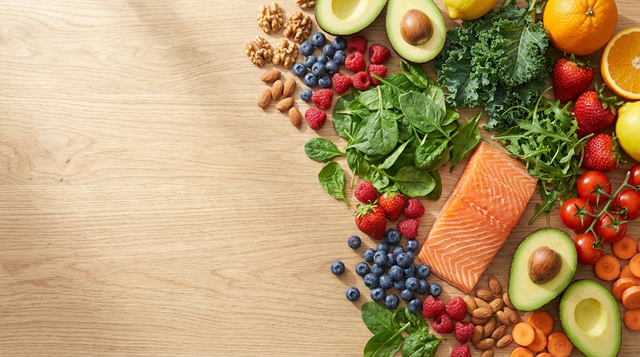
Colorful whole foods for cycle-syncing nutrition
Eating in the Ovulatory Phase: Antioxidants and Fiber at the Peak
During ovulation, estrogen hits its highest point of the cycle, and the body benefits from foods that support this peak and help it metabolize all that estrogen smoothly afterward. Fiber is the star nutrient here. Fiber binds to excess estrogen in the digestive tract and helps escort it out of the body, supporting healthy hormonal balance. Load up on vegetables, fruits, whole grains, legumes, nuts, and seeds.
The ovulatory phase also loves antioxidant-rich, colorful produce — berries, leafy greens, brightly colored vegetables, and fresh fruit. Because this is the most fertile window and the body’s metabolic “high,” many nutritionists suggest plenty of raw and lightly cooked vegetables, light grains like quinoa, and anti-inflammatory foods. Some women find that eating a bit lighter and fresher feels best when energy and mood are already running high.
If you’re someone who runs warm and energetic during ovulation, you might naturally gravitate toward cooler, fresher foods anyway — salads, fruit, raw vegetables, cooling herbs like mint and cilantro. Hydration remains important. And because this phase often comes with peak social energy and dinners out, it’s also a phase to enjoy food’s social side without overthinking it. Cycle syncing is about emphasis, not rigidity, and the ovulatory phase is a natural time for both vibrant nutrition and joyful, shared meals.
Eating in the Luteal Phase: Fiber, Anti-Inflammatory, and Steady Blood Sugar
The luteal phase is arguably the most important phase to eat thoughtfully, because this is where cravings, mood swings, and bloating tend to show up. As progesterone rises and then both hormones fall, several things happen that have direct nutritional implications.
First, the body’s metabolic rate increases slightly, and appetite genuinely rises — this is real, not a lack of willpower. The luteal phase is not the time to severely restrict calories; your body legitimately needs a bit more fuel. The smarter move is to honor that increased appetite with substantial, satisfying, blood-sugar-stable foods rather than fighting it.
Second, blood sugar regulation can become more sensitive in the luteal phase, which is part of why cravings (especially for sugar and refined carbs) intensify before a period. The strategy is to keep blood sugar steady: pair carbohydrates with protein and fat, choose complex carbs over refined ones, and don’t skip meals (skipping meals in the luteal phase is a fast track to crankiness and a 4pm sugar crash). Complex carbohydrates like sweet potatoes, squash, brown rice, oats, and root vegetables are luteal-phase heroes — they satisfy cravings, stabilize blood sugar, and even support serotonin production, which can help mood.
Third, this is a phase that loves magnesium and B vitamins, both of which are involved in mood and PMS. Magnesium-rich foods — dark leafy greens, pumpkin seeds, dark chocolate, beans, and nuts — can help with mood, cramping, and the chocolate cravings themselves. Calcium and vitamin-rich foods may help with PMS symptoms too. Anti-inflammatory foods — fatty fish, turmeric, ginger, olive oil, berries, and leafy greens — help counter the bloating and inflammation many women feel premenstrually.
A few practical luteal-phase moves: increase fiber to combat bloating and constipation (which often worsen as progesterone slows digestion), reduce excess salt and ultra-processed foods that worsen water retention, ease up on caffeine and alcohol if they spike your anxiety or disrupt your sleep, and lean into warm, grounding, nourishing meals as you head toward your period. If you crave chocolate, have some good-quality dark chocolate — it’s magnesium-rich and genuinely satisfying, and white-knuckling through a real craving usually backfires.
This phase-by-phase nutrition approach is exactly the kind of thing that sounds wonderful in theory and falls apart in practice — until you have a tool that tells you, today, which phase you’re in and what foods to lean toward. We’ll get to how that works. For now, just notice how much of this depends on actually knowing where you are in your cycle.
Training for Your Cycle
If nutrition is where cycle syncing gets interesting, training is where it gets genuinely liberating — because the conventional fitness culture of “grind every day or you’re lazy” is spectacularly mismatched to female physiology. Your strength, endurance, recovery, injury risk, and motivation all shift across the cycle. Training with that rhythm rather than against it tends to produce better results and a far healthier relationship with exercise.
A crucial caveat first: this is a framework, not a cage. If you feel fantastic and want to lift heavy during your period, do it. If you feel wiped out during what “should” be your high-energy phase, rest. Your felt experience always overrides the chart. Cycle-synced training is a starting hypothesis, not a prescription. With that said, here’s how the phases generally map to movement.
Training in the Menstrual Phase: Rest and Gentle Movement
With both estrogen and progesterone at rock bottom, energy is usually at its lowest during your period, and the body is asking for rest. This is the phase to be gentle. That doesn’t necessarily mean doing nothing — gentle movement can actually ease cramps and lift mood — but it means dialing way down on intensity.
Excellent menstrual-phase movement includes walking, restorative or yin yoga, gentle stretching, light mobility work, and easy swimming. Many women find that gentle yoga specifically helps with cramps and back pain, and a slow walk outdoors can do wonders for the low, foggy mood that sometimes accompanies a period. The key word is gentle. This is not the phase to chase a personal record or push through a brutal HIIT class out of guilt. Honoring the need for rest during menstruation isn’t weakness; it’s intelligent training, and it sets you up to come back stronger as estrogen rises.
Listen to your body day by day, too. The first day or two of a period are often the most depleted, and energy frequently returns by day three or four — at which point you can naturally start to ramp back up.

A woman doing gentle yoga and movement
Training in the Follicular Phase: Build and Push
As estrogen climbs after your period, so does energy, motivation, and — importantly — your body’s capacity to handle intensity and recover from it. The follicular phase is widely considered the best window for ramping up your training. Rising estrogen supports muscle building, improves recovery, and tends to make hard effort feel more accessible.
This is the phase to start a new training block, try new and challenging workouts, increase intensity, and push toward progress. Strength training shines here — your body is primed to build muscle, and you may find you can lift heavier or do more reps than usual. Higher-intensity cardio, interval training, challenging classes, and learning new skills all suit the follicular phase, because rising estrogen makes you more open to novelty and better able to handle a demanding load. Some research also suggests the follicular phase may be a smart time to push strength work, as estrogen appears supportive of muscle and connective tissue.
If you’re going to schedule the hardest training of your month, the follicular and ovulatory phases are where it belongs. Think of follicular as the climb: energy is building, recovery is good, and your body says yes to challenge.
Training in the Ovulatory Phase: Peak Performance
At ovulation, estrogen peaks and there’s a small testosterone bump, and many women feel like they’re operating at their physical peak. This is often when you’ll feel strongest, most powerful, and most capable of explosive, high-output effort. It’s the natural home for your most intense workouts of the month: heavy lifting, sprint intervals, HIIT, challenging group classes, competitive sport, and anything that demands maximum output.
If you want to attempt a personal record or do your hardest session of the cycle, the ovulatory window is often the prime candidate. Confidence and social energy are also high, which is part of why group classes, team sports, and partner workouts feel especially good now.
One important note for the follicular and ovulatory phases: higher estrogen has been associated with greater joint laxity, which some research links to a higher risk of certain ligament injuries (like ACL injuries) around ovulation. This isn’t a reason to avoid intense exercise — it’s a reason to warm up properly, prioritize good movement quality, and not skip your mobility work when you’re chasing big numbers. Push hard, but push smart.
Training in the Luteal Phase: Strength, Steady State, and Tapering Down
The luteal phase, with its rise in progesterone and slightly higher body temperature and metabolic rate, is a phase of two halves for training, just as it is for everything else. In the early-to-mid luteal phase, many women still feel strong and capable — this is a great time for steady strength training, moderate-intensity work, Pilates, and consistent effort. Because the body’s metabolism runs a little higher here, steady-state cardio and strength work feel productive and well-fueled.
As the luteal phase progresses toward your period, though, energy typically starts to dip, recovery slows, perceived effort rises (the same workout feels harder), and body temperature regulation gets a bit less efficient — workouts can feel hotter and more taxing than usual. This is the signal to gradually taper. Late luteal is the time to shift toward lower-intensity strength, longer steady walks or easy cardio, yoga, Pilates, and an emphasis on recovery, sleep, and not overdoing it. Pushing maximum intensity into a body that’s premenstrual and under-recovering tends to feel terrible and increase injury risk.
A simple mental model for the whole cycle: rest and restore (menstrual) → build and ramp up (follicular) → peak and push (ovulatory) → maintain then taper down (luteal), and back to rest. It’s a wave, and your training should ride it rather than flatten it.
Productivity, Mood, and Social Energy by Phase
Cycle syncing isn’t only about food and fitness. Some of its most life-changing applications are in how you work, create, connect, and protect your energy. Your brain runs on the same hormonal tides as the rest of you, and aligning your schedule with those tides can make you both more effective and far kinder to yourself.
Menstrual phase — reflect and reset. With hormones low, this is often a quieter, more inward-facing time. Many women find their analytical and intuitive thinking is sharp during their period, even as their drive for socializing and high-stakes performance dips. It’s an excellent phase for reflection, reviewing the past month, evaluating what’s working, journaling, and making thoughtful decisions about direction. Socially, it’s a natural time to say no to draining commitments and protect some solitude. If you can, schedule lighter days, deep solo work, and honest self-assessment here, and give yourself permission to decline things that would deplete you.
Follicular phase — plan, create, and start. As estrogen rises, the brain feels sharper, more creative, more optimistic, and more open to new ideas. This is the phase for brainstorming, planning, starting projects, problem-solving, learning new skills, and tackling fresh challenges. Motivation is naturally higher, so it’s a great time to set goals and map out the weeks ahead. Socially, you’re warming up — open to new connections and new experiences. If you have a big creative project or a strategic plan to make, the follicular phase is your friend.
Ovulatory phase — communicate, collaborate, and connect. With estrogen peaking and verbal fluency and confidence running high, this is the phase for anything that requires you to be “on” with other people: presentations, big meetings, negotiations, networking, interviews, difficult conversations, dates, parties, and collaboration. You’re at your most charismatic, articulate, and socially energized. If you get to choose when to schedule the meeting where you need to shine or the social event you’re most excited about, aim for the ovulatory window. It’s the phase to be seen and to connect.
Luteal phase — execute, refine, and complete. The early-to-mid luteal phase is, for many women, a productivity powerhouse of a different kind. Where follicular and ovulatory energy is expansive and outward, luteal energy is often detail-oriented, focused, and good at finishing. This is the phase for executing plans, completing tasks, handling administrative work, organizing, editing, tying up loose ends, and getting things done. The nesting, tidying impulse that comes with progesterone can be channeled beautifully into clearing your to-do list and your space. As you move into late luteal, though, social energy and patience often drop — this is the phase to lighten your social calendar, protect your boundaries, avoid overcommitting, and build in extra rest and downtime before your period arrives.
The takeaway: try to front-load the big social and creative pushes into the first half of your cycle and let the second half be about focus, completion, and gentle wind-down. You won’t always have control over your schedule, of course — but even partial alignment can make a noticeable difference in how smooth your month feels.
Sleep, Skin, and Libido Through the Cycle
Three more dimensions of life ride the hormonal wave, and understanding them makes the whole picture click into place.
Sleep. Sleep quality genuinely changes across the cycle, and progesterone is the main character. In the luteal phase, rising progesterone raises your core body temperature slightly — and since a drop in core temperature is part of how the body initiates sleep, a warmer baseline can make luteal sleep lighter and more fragmented for many women. As progesterone and estrogen fall in the late luteal phase, sleep can be disrupted further, which is part of why the days before a period often come with poorer rest. The follicular phase, by contrast, tends to bring easier, deeper sleep. Practical moves: keep your bedroom cooler in the luteal phase, be extra disciplined with sleep hygiene before your period, ease up on caffeine and alcohol when they’re disrupting your rest, and don’t be surprised when your sleep tracker shows worse numbers premenstrually — it’s hormonal, not personal.
Skin. Skin is a faithful reporter of your hormones. In the follicular and ovulatory phases, rising and peaking estrogen tends to boost collagen, hydration, and that healthy glow — skin often looks its best around ovulation. In the luteal phase, the shift in the estrogen-to-progesterone ratio and a rise in androgen activity stimulates the skin’s oil glands, which is why premenstrual breakouts so reliably appear in the days before a period, often along the jaw and chin. You can work with this: lighter, fresher skincare and makeup when your skin is glowing, and more attention to oil control, gentle exfoliation, and not over-stripping your skin in the luteal phase. Knowing a breakout is coming because of your phase takes a surprising amount of emotional sting out of it.
Libido. Sex drive is one of the most consistently cyclical experiences. For most women, libido rises through the follicular phase and peaks around ovulation — which makes biological sense, since ovulation is the fertile window, and rising estrogen plus a testosterone bump amplify desire, confidence, and physical sensitivity. Libido often dips in the luteal phase, particularly the late luteal phase when hormones are falling and PMS may be present, though some women experience a second smaller bump in the early luteal phase. Understanding this rhythm can take pressure off both you and a partner — desire isn’t broken when it ebbs; it’s following a predictable tide. And for couples, knowing the pattern can be genuinely useful for connection and intimacy.
Why Tracking Is the Foundation of Everything
Here is the hinge on which this entire guide turns: you cannot sync to a cycle you cannot see. Everything we’ve covered — the iron-rich period meals, the follicular workout build, the ovulatory big meeting, the luteal early-night — depends on one thing: knowing which phase you’re actually in, today, in your body. And that is genuinely hard to do by memory or guesswork.
Most women don’t have a tidy 28-day cycle that ovulates on day 14 like the textbook. Real cycles vary in length, the timing of ovulation shifts, stress and travel and illness throw things off, and the phases blur into each other. Trying to track all of this in your head, or on a paper calendar, is a recipe for being wrong about your phase half the time — and being wrong about your phase means doing luteal things during your follicular window and wondering why nothing lines up. This is why so many women try cycle syncing, find it confusing, and quietly give up. The problem usually isn’t the concept; it’s the lack of an accurate, effortless way to know where they are.
This is precisely the problem that modern cycle-tracking technology solves. A good tracking app turns the invisible visible. It learns your unique patterns, predicts your phases, flags your fertile window and ovulation, and — crucially, in 2026 — uses AI to translate all of that into plain, personalized, daily guidance. Instead of “I think I might be in my luteal phase, so maybe I should eat more fiber?” you get “You’re in your luteal phase today — here’s what to eat, how to train, and what to expect.” The gap between knowing the theory of cycle syncing and actually living it is bridged almost entirely by the right tool.
If you’re a numbers person, the standalone resources at vyvecare and the wider library on the best period tracker are useful starting points for understanding how phase prediction and cycle education work in plain language before you commit to anything. The point is that tracking isn’t an optional accessory to cycle syncing — it’s the foundation the whole practice stands on.
What to Look for in a Cycle-Tracking App
Not all trackers are created equal, and since you’ll be trusting an app with both your daily decisions and some of your most intimate data, it’s worth knowing what separates a great one from a basic calendar. Here’s what genuinely matters in 2026.
Prediction accuracy. The whole point is knowing your phase, so the app’s predictions need to be good — ideally adaptive, learning from your logged data over time rather than just assuming a generic 28-day template. Look for trackers that adjust to your cycle length and patterns, and that get more accurate the more you use them.
AI-powered, personalized guidance. This is the single biggest leap forward in recent years. A basic app shows you a calendar; a great one interprets your cycle and tells you what to actually do with it. The best modern trackers include an AI coach that delivers daily, personalized advice tailored to your phase, your symptoms, and your patterns — turning raw data into a plan you can act on without a nutrition or fitness degree.
Cycle-synced nutrition features. Given how central food is to cycle syncing, a tracker that includes phase-specific food and nutrition recommendations is enormously practical. Instead of you having to remember that the luteal phase wants fiber and magnesium, the app surfaces it for you, often with concrete food ideas.
Symptom, mood, and energy tracking. The richer the data you log — symptoms, mood, energy, sleep, skin, cravings — the smarter and more personalized the guidance becomes. Good apps make logging fast and frictionless so you’ll actually do it.
Ovulation and fertile-window prediction. Whether you’re trying to conceive, avoiding (with appropriate methods and not relying on an app alone), or simply want to know when your peak energy is coming, accurate ovulation and fertile-window prediction is essential.
Privacy-first design. This one is non-negotiable. Your cycle data is among the most sensitive information you have, and in recent years women have become rightly cautious about which apps they trust with it. Look for trackers with a genuine privacy-first philosophy — clear data practices, strong protection of your information, and a commitment to keeping your intimate data yours. An app that treats your reproductive data as a product to be sold is one to walk away from.
How Vyve Makes Cycle Syncing Effortless
This is where a well-designed tool turns everything above from “nice idea” into “daily reality.” Vyve is an AI period tracker built specifically around the gap most women hit with cycle syncing: knowing the theory but struggling to live it consistently. Rather than handing you a calendar and leaving you to figure out the rest, Vyve is designed to translate your cycle into clear, personalized, day-by-day guidance — which is exactly what cycle syncing requires.
At the center of the experience is Vyve’s AI Cycle Coach, which functions like a knowledgeable companion in your pocket. Instead of you trying to remember which phase you’re in and what it means, the AI Cycle Coach gives you personalized daily guidance based on where you actually are in your cycle — what to expect, how you might feel, and what will help today. It’s the difference between guessing and knowing, and it’s what makes consistent cycle syncing realistic for a busy person who doesn’t have the bandwidth to track all of this manually.
Paired with the coach is Vyve’s cycle-synced Food and Nutrition guidance — and this is where the long nutrition section above becomes effortless. Rather than memorizing that your menstrual phase wants iron, your follicular phase wants fresh and light, and your luteal phase wants fiber and magnesium, you get phase-appropriate food recommendations surfaced for you, automatically, on the right days. The app does the remembering so you can just eat well. For anyone who has tried to cycle-sync their diet and found it too fiddly to sustain, this is the feature that makes it stick.
Around that core, Vyve delivers the foundational tracking you’d expect from a serious app: AI-powered cycle predictions that learn and adapt to your unique patterns, ovulation and fertile-window tracking so you always know when your peak is coming (or when your fertile days are, if that’s relevant to you), and rich symptom and mood tracking so the guidance keeps getting more personal the more you log. The more Vyve learns about you, the more tailored the coaching becomes.
And critically, Vyve is built privacy-first — your intimate cycle data is treated as exactly that: yours. In a category where women have every reason to be cautious about who holds their reproductive data, that foundational commitment matters. You can explore the full approach and philosophy behind the app at vyvecare, and if you’re ready to try it, Vyve is available as a dedicated Period Tracker App on the App Store.
The reason a tool like Vyve matters so much for cycle syncing specifically is that it closes the gap between knowledge and action. You can read this entire guide, understand every phase perfectly, and still find that real life — work, stress, travel, a cycle that isn’t textbook — makes it hard to actually do. An AI coach that tells you your phase and what to do about it, every single day, is what turns cycle syncing from an aspiration into a habit.

A happy woman walking outdoors, feeling balanced
Cycle Syncing for Specific Situations
Cycle syncing is a flexible framework, but some situations deserve a tailored note. Before diving in, the essential reminder once more: the following is general educational information, not medical advice, and cycle syncing is not a treatment or a form of contraception. For any of these situations, a qualified healthcare professional is your most important resource.
Irregular Cycles
If your cycle length swings around a lot, classic day-by-day cycle syncing can feel impossible, because you genuinely don’t know when ovulation will happen. The good news is that you can still sync — you just need to lean harder on symptom-based tracking rather than calendar math. Watch for the body’s own signals: changes in cervical mucus (it becomes clearer and more stretchy, like egg white, around ovulation), a shift in libido and energy, and changes in mood and physical sensation. An adaptive, AI-driven tracker is especially valuable with irregular cycles, because it can learn your patterns over time and flag likely phases based on your logged symptoms rather than assuming a fixed length. And persistently irregular cycles are worth a conversation with a doctor, since they can have underlying causes worth understanding.
PCOS
Polycystic ovary syndrome often involves irregular or absent ovulation, insulin resistance, and hormonal imbalances, which complicates traditional phase-based syncing. For many women with PCOS, the most useful elements of the cycle-syncing toolkit are the nutritional principles that support blood-sugar stability and reduce inflammation — emphasizing fiber, protein, healthy fats, and complex carbs over refined sugar, and including anti-inflammatory foods. Strength training and regular movement support insulin sensitivity too. Rather than rigidly chasing four phases that may not be clearly present, women with PCOS often benefit from a steadier, blood-sugar-focused, anti-inflammatory baseline, while tracking symptoms closely. PCOS is a medical condition, and management should be guided by a healthcare provider — but the lifestyle principles here can be a helpful complement to medical care.
Perimenopause
In perimenopause — the transitional years before menopause, often through the forties and into the fifties — cycles become increasingly unpredictable as hormones fluctuate and decline. Phases shorten, lengthen, skip, and shift, sometimes dramatically. Cycle syncing in the strict sense becomes harder, but the underlying philosophy — eating, training, and resting in response to how your body actually feels rather than a rigid schedule — becomes more valuable, not less. Tracking is especially useful here for spotting patterns amid the chaos, understanding new symptoms, and having clear information to bring to a doctor. Nutritionally, emphasis on protein (for muscle preservation), bone-supporting nutrients, fiber, and anti-inflammatory foods serves perimenopausal women well, and strength training becomes particularly important for protecting muscle and bone. As always, perimenopause symptoms are worth discussing with a healthcare provider who can offer personalized options.
Trying to Conceive
For women trying to conceive, understanding the cycle is genuinely powerful, because intercourse during the fertile window — the roughly six days leading up to and including ovulation — is what gives conception its best chance. Accurate ovulation and fertile-window tracking is therefore extremely useful for timing. Nutritionally, a nutrient-dense, balanced diet supports reproductive health, and many providers recommend specific prenatal nutrients (like folate) when trying to conceive — a conversation to have with your doctor. The important caveats: an app’s prediction is an estimate, not a guarantee, and if you’ve been trying for a while without success, or have any concerns, a fertility-aware healthcare provider should be your guide. Conversely, and to be crystal clear, fertile-window tracking is not a reliable contraceptive method — please don’t use casual cycle tracking to prevent pregnancy.
Common Myths and a Reality Check
Cycle syncing has earned a passionate following, and like any popular wellness idea, it has accumulated some myths and overstatements along the way. A little healthy skepticism keeps the practice useful rather than dogmatic. Here’s an honest reality check.
Myth: There’s rock-solid, abundant science proving every detail of cycle syncing. Reality: the underlying hormonal physiology is well established, and there’s genuine research on cyclical changes in metabolism, mood, sleep, and exercise response. But the specific, prescriptive “eat exactly this in this phase, do exactly that workout” protocols are more emerging framework than settled science. The smart approach is to treat cycle syncing as a flexible, personalized experiment grounded in real physiology — not a set of laws. Use it as a guide, pay attention to your own body, and keep what works.
Myth: You must follow the rules perfectly or it doesn’t work. Reality: your body is resilient, and cycle syncing is about gentle emphasis, not rigid compliance. Eating a salad in your luteal phase or lifting heavy during your period will not break anything. The all-or-nothing mindset is the enemy here; the whole point is to reduce stress and self-judgment, not add a new source of it.
Myth: Cycle syncing can be used to prevent pregnancy. Reality: no. This bears repeating because it’s the most important reality check of all. Casual cycle tracking and syncing is not contraception. Dedicated fertility-awareness contraceptive methods exist, but they require specific training and strict rules, and they are not the same thing as a lifestyle app telling you your phase.
Myth: Every woman feels the textbook way in each phase. Reality: women vary enormously. Some feel their best mid-cycle; some feel anxious at ovulation. Some sail through their luteal phase; others have significant PMS. Cycle syncing should be personalized to your experience — which is exactly why tracking your own symptoms matters more than memorizing a generic chart.
Myth: If cycle syncing doesn’t fix your symptoms, you’re doing it wrong. Reality: cycle syncing is a wellness framework, not a treatment for medical conditions. If you have severe symptoms — debilitating periods, signs of a hormonal disorder, or anything that significantly disrupts your life — that’s a medical issue deserving real medical care, not a lifestyle tweak. Cycle syncing can complement good medical care; it can’t replace it.
The honest bottom line: cycle syncing is a genuinely useful, physiologically grounded way to live more in tune with your body, and many women find it improves their energy, mood, and relationship with food and exercise. Hold it lightly, personalize it, and let your own body be the final authority.
Frequently Asked Questions
- What is cycle syncing in simple terms? Cycle syncing is the practice of adjusting your food, exercise, work, and rest to match the four phases of your menstrual cycle (menstrual, follicular, ovulatory, and luteal). Because your hormones rise and fall across the month, your energy and needs change too — cycle syncing means working with that rhythm instead of against it.
- Do I really need an app, or can I just use a calendar? You can start with a calendar, but most women find a good app dramatically easier and more accurate. Real cycles aren’t a perfect 28 days, ovulation timing shifts, and tracking phases by memory is error-prone. A modern app with AI predictions learns your unique patterns and — in the best cases, like Vyve’s AI Cycle Coach — tells you your phase and what to do about it each day, which is what makes cycle syncing actually sustainable.
- How long does it take to see benefits from cycle syncing? Many women notice small shifts within a cycle or two — better-timed workouts, fewer energy crashes, less guilt about resting. The bigger benefits, like understanding your own patterns and feeling more in control of your month, build over a few cycles as you track and learn what’s true for your body. Patience and consistent tracking are key.
- Can I do cycle syncing if my periods are irregular? Yes, but you’ll rely more on symptom-based tracking than on calendar predictions. Watch your body’s signals — cervical mucus changes, energy and libido shifts, mood — and use an adaptive tracker that learns your patterns over time. Persistently irregular cycles are also worth discussing with a doctor to understand any underlying cause.
- Is cycle syncing safe while on hormonal birth control? Hormonal contraceptives (like the combined pill) typically suppress your natural hormonal fluctuations and ovulation, so the classic four-phase pattern doesn’t apply in the same way. The lifestyle principles — eating well, training intelligently, resting when tired — still serve you, but phase-based syncing as described here is designed around a natural, unmedicated cycle. Talk to your provider about what applies to your situation.
- Does cycle syncing actually help with PMS? Many women find that eating to stabilize blood sugar, prioritizing magnesium and fiber, reducing excess salt and alcohol, and tapering exercise intensity in the late luteal phase noticeably eases PMS discomfort. It’s not a guaranteed cure, and severe PMS (or PMDD) deserves medical attention — but supportive luteal-phase habits genuinely help a lot of women feel better.
- What should I eat during my period? Focus on replenishing iron (red meat, lentils, leafy greens, paired with vitamin C for absorption), warming and comforting foods like soups and stews, magnesium-rich foods like dark chocolate and pumpkin seeds, anti-inflammatory omega-3s, and plenty of hydration. Be gentle with yourself — this is not the phase for restriction.
- When in my cycle am I strongest for workouts? For most women, physical strength and capacity peak in the follicular and especially the ovulatory phases, when estrogen is high. These are the best windows for heavy lifting, high-intensity training, and personal records. The menstrual and late-luteal phases call for gentler, more restorative movement.
- Can cycle syncing be used as birth control? No. This is important: casual cycle syncing and tracking is not a reliable contraceptive method. Dedicated fertility-awareness-based methods exist but require specific training and strict adherence, and they are not the same as a lifestyle app showing your phase. For contraception, talk to a healthcare provider.
- Is cycle syncing useful during perimenopause? The strict four-phase approach gets harder as cycles become unpredictable in perimenopause, but the underlying philosophy — responding to how your body actually feels, prioritizing protein and strength training, and tracking symptoms to spot patterns — becomes even more valuable. Tracking also gives you useful information to share with your doctor about changing symptoms.
- How does an AI cycle coach actually help? An AI cycle coach interprets your logged data and tells you, in plain language, what phase you’re in and what will help today — what to eat, how to train, what to expect with your mood, sleep, and energy. It removes the mental load of remembering all the cycle-syncing principles yourself, which is the main reason people abandon the practice. Vyve’s AI Cycle Coach is built specifically to deliver this kind of personalized daily guidance.
- Is my cycle data private and safe in a tracking app? It depends entirely on the app, which is why privacy should be a top criterion in your choice. Your reproductive data is deeply sensitive, and you should choose a tracker with a genuine privacy-first commitment that treats your data as yours, not as a product to sell. Vyve is built privacy-first for exactly this reason. To learn more about privacy-conscious tracking before choosing, the resources at the best period tracker and the overview at vyvecare are good places to start.
- Do I have to change my diet completely four times a month? No — and you shouldn’t try to. Cycle syncing is about gentle emphasis on top of an already balanced diet, not four totally different meal plans. You’re nudging your existing healthy eating toward what each phase can use most (more iron during your period, fresher foods in the follicular phase, more fiber and magnesium in the luteal phase), not overhauling everything.
- Can men or non-cycling people benefit from any of this? Cycle syncing is specific to people who menstruate, but the broader principle — paying attention to your body’s natural rhythms and adjusting effort, food, and rest accordingly — is universally useful. For people who cycle, though, the menstrual rhythm offers a uniquely powerful map to follow.
Conclusion: Coming Home to Your Body
For too long, women were taught to treat their cycles as an inconvenience — something to push through, suppress, and apologize for. Cycle syncing offers a radically different relationship: one of curiosity, respect, and partnership with your own physiology. When you eat to replenish during your period, ride the energy of your follicular and ovulatory phases, and wind down with grace through your luteal phase, you stop fighting your body and start working with it. The result, for so many women, is more energy, steadier moods, better workouts, less guilt, and a deep, grounding sense of finally understanding what’s been happening inside them all along.
The science is real and still growing, the framework is flexible, and the most important rule is to let your own body be the final authority. Cycle syncing isn’t about perfection or rigid rules — it’s about tuning in. And while the philosophy is timeless, what makes it genuinely livable in 2026 is the technology that finally makes your invisible inner rhythm visible. The right tracker turns the theory in this guide into a simple daily practice: it tells you where you are, what your body needs, and how to feel your best — today.
If you’re ready to stop guessing and start living in tune with your hormones, that’s exactly what Vyve is designed for. With its AI Cycle Coach, cycle-synced nutrition guidance, adaptive predictions, and privacy-first design, it makes cycle syncing effortless rather than overwhelming. You can explore the full approach at vyvecare, dig into more cycle-health education at the best period tracker, and when you’re ready to begin, download the Period Tracker App and let your cycle become the map it was always meant to be.
Your body has been keeping this rhythm your whole life. It’s never too late to start listening — and to live, eat, train, and rest in tune with the remarkable, cyclical, powerful body you already have.
This article is for general educational purposes only and does not constitute medical advice. It is not a diagnostic tool, a treatment, or a method of contraception. Always consult a qualified healthcare professional regarding your individual health, your menstrual cycle, contraception, fertility, or any medical condition.